
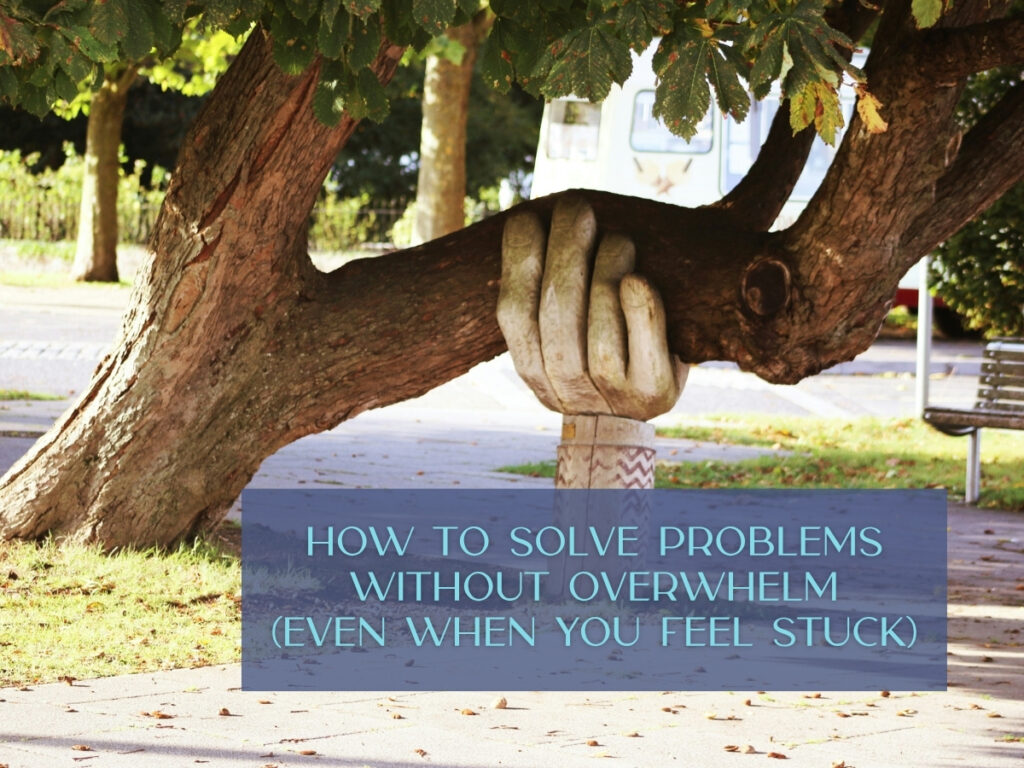
 by Dr. Christine Li
Have you ever noticed how one small problem can suddenly feel like everything is falling apart?
You’re tired. Your space feels cluttered. Tasks pile up. And instead of taking action, you freeze, delay, or distract yourself.
If that sounds familiar, you’re not alone—and more importantly, you’re not broken.
In Make Time for Success Podcast Episode 281, Dr. Christine Li shares a gentle but powerful framework to help you learn how to solve problems without overwhelm, so you can move from stuck to steady action again.
Let’s walk through what this looks like in real life.
Why Problems Feel So Heavy (Especially in Midlife)
At this stage of life, you’re often carrying more than just your own responsibilities.
You might be managing:
- A home that never seems fully “done”
- Work or business demands
- Family needs
- Emotional and mental fatigue
So when a “problem” shows up, your nervous system doesn’t treat it as one simple task.
It treats it like a threat.
And that’s where overwhelm begins.
But here’s the shift:
Problems are not the real issue—your relationship to the problem is.
Learning how to solve problems without overwhelm starts by changing how you approach them.
A Gentle Framework to Move Out of Stuck Mode
Instead of trying to fix everything at once, Dr. Li suggests something surprisingly simple:
Focus on just one problem.
Yes—just one.
Because when you think you have 50 problems, your brain shuts down.
But when you choose one?
You create clarity, direction, and momentum.
5 Gentle Ways to Solve Problems Without Overwhelm
Here are five supportive strategies you can start using today.
1. Focus on One Problem at a Time
Trying to fix everything keeps you stuck.
Instead:
- Choose one specific issue
- Write it down
- Give it your full attention
This alone reduces overwhelm instantly.
2. Separate the Problem from Your Emotions
Often, what makes something feel overwhelming isn’t the problem itself—it’s how you feel about it.
Ask yourself:
- What is the actual issue?
- What am I feeling about it?
When you separate the two, things become more manageable.
3. Notice Your Procrastination Pattern
If you’re delaying action, there’s always a reason.
Common ones include:
- “I don’t have time”
- “I don’t know where to start”
- “I don’t have the energy”
- Fear of doing it wrong
- Avoiding difficult conversations
Awareness here is powerful.
Because once you see the pattern, you can gently interrupt it.
4. Take One Small, Doable Step
This is where everything changes.
You don’t need a full plan.
You just need:
- One action
- One decision
- One step forward
Examples:
- Set a 10-minute timer
- Write one email
- Clear one small area
Action creates energy.
And energy dissolves overwhelm.
5. Release the Resistance (Not Force Yourself Through It)
Here’s the truth most people miss:
Resistance—not the problem—is usually the real issue.
And resistance comes from:
- Fear
- Self-doubt
- Mental overload
So instead of pushing harder, try:
- Pausing
- Breathing
- Reframing your thoughts
Then move gently forward.
This is the heart of how to solve problems without overwhelm—not forcing, but flowing.
What Happens When You Take Action
Once you begin—even in a small way—something shifts.
You start to:
- See solutions more clearly
- Feel more capable
- Build momentum
- Reduce anxiety naturally
As Dr. Li explains, taking action helps you move out of emotional paralysis and into real progress.
And that’s where confidence begins again.
A Simple Reflective Exercise
Take 5–10 minutes for this.
Grab a notebook and write:
1. What is one problem I’ve been avoiding?
2. Why does it feel overwhelming?
(Be honest—time, energy, fear, confusion?)
3. What is one small step I can take today?
That’s it.
Not tomorrow.
Not when you feel ready.
Just today.
You’re Not Stuck—You’re Just Paused
If you’ve been feeling overwhelmed, procrastinating, or stuck in clutter and low energy…
It doesn’t mean you’ve failed.
It means your system is asking for:
- Simplicity
- Clarity
- Gentle action
And when you practice how to solve problems without overwhelm, you give yourself exactly that.
Ready for More Support?
If this resonates with you, you don’t have to figure it all out alone.
The Simply Productive program is designed to help you:
- Clear mental and physical clutter
- Build consistent energy
- Follow through without burnout
- Create calm, focused productivity
👉 Join the waitlist here: https://maketimeforsuccesspodcast.com/SP
You don’t need to solve everything today.
Just start with one small step.
That’s how everything changes.